What to know
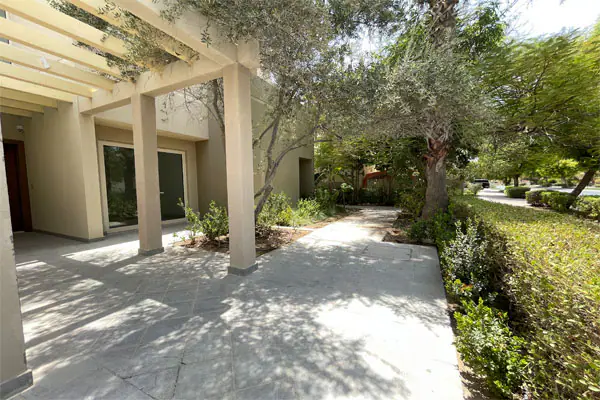
- Successful villa landscaping in Dubai balances heat-tolerant planting, shade, privacy, circulation, irrigation efficiency, and evening use.
- Pool levels, drainage, hardscape, planting, lighting, and outdoor structures should be designed together to avoid construction conflicts.
- Plant selection should respond to sun exposure, wind, soil conditions, water demand, maintenance expectations, and the scale of the villa.
- Layered lighting and correctly zoned irrigation make the landscape more comfortable, efficient, and practical throughout the year.
- A documented maintenance plan protects plant health, irrigation performance, finishes, and the intended character of the garden.
How Your Home’s Landscaping Shapes Your Mind, Your Health, and Your Family’s Future
By Green Earth Landscaping & Pools LLC | greenearth.design
Most people think of landscaping as an aesthetic decision. They picture a beautiful garden, a gleaming pool, a pergola strung with soft lights — and they think: that would be nice to have.
What they don’t realise is that the outdoor environment surrounding your home is one of the most powerful — and most underestimated — forces shaping your family’s daily psychology, physical health, emotional resilience, and long-term success.
This isn’t interior design philosophy or lifestyle marketing. It is science. Decades of research in environmental psychology, neuroscience, and biophilic design have reached a clear and consistent conclusion: the spaces we inhabit shape the people we become.
And for families living in Dubai — where villas are large, outdoor space is generous, and the pressure of a fast-paced city life is real — the way you design your home’s outdoor environment may be one of the most important investments you ever make. Not just in property. In people.
The Science Behind It: Why Our Brains Respond to Outdoor Spaces
Before we explore the specific effects of landscaping on your family’s life, it helps to understand why nature and outdoor design have such a profound effect on the human brain.
Biophilia: We Are Wired for Nature
Human beings evolved over hundreds of thousands of years in natural environments. Our nervous systems, our brains, our stress-response mechanisms — all of them developed in relationship with trees, water, open sky, and green space.
The concept of biophilia — first articulated by biologist Edward O. Wilson — describes the innate human tendency to seek connection with nature. It is not a preference or a personality trait. It is biological. Our brains are literally calibrated to respond to natural environments with calm, and to respond to their absence with stress.
When you step into a beautifully landscaped garden — one with flowing water, layered greenery, and open sky — your nervous system responds instantly and unconsciously. Cortisol levels drop. Heart rate slows. Breathing deepens. The part of your brain responsible for rumination and anxiety quiets down.
This happens before you have a single conscious thought about it. It happens to adults, to teenagers, and to children as young as infants. It is one of the most reliable psychological responses known to science.
Attention Restoration Theory
Researchers Rachel and Stephen Kaplan developed Attention Restoration Theory in the 1980s, and their findings have been replicated dozens of times since. The core idea is simple: focused mental work — the kind required by modern professional life, by screen time, by commuting, by parenting — depletes a specific cognitive resource they call directed attention.
Nature restores it.
Natural environments engage what the Kaplans called soft fascination — the gentle, effortless engagement that comes from watching water move, leaves shift in a breeze, or light change across a garden. This state of soft fascination allows the directed attention system to rest and recover, leaving us mentally sharper, emotionally steadier, and more capable of complex thought and decision-making.
A swimming pool in your garden is not a luxury. It is an Attention Restoration environment, built into your daily life.
Stress Recovery Theory
Psychologist Roger Ulrich’s Stress Recovery Theory goes further. His research found that exposure to natural environments triggers a rapid, measurable recovery from physiological stress — faster than any indoor environment, regardless of how comfortable or beautifully designed that indoor space might be.
In his landmark study, patients recovering from surgery who had a window view of trees recovered faster, required less pain medication, and had fewer complications than patients whose windows faced a brick wall. The difference was a view. Nothing more.
Imagine what a full garden — one you can walk through, sit in, and immerse yourself in — does for your family’s daily recovery from the stresses of modern life.
How Your Garden Affects You: The Adult Experience
The Decompression Effect
For professionals in Dubai, the transition from work to home is one of the most psychologically important moments of the day. The quality of that transition — the mental and emotional shift from high-alert work mode to restful home mode — has enormous consequences for sleep quality, relationship quality, and long-term mental health.
A well-designed outdoor space creates what psychologists call a decompression zone. When you arrive home and step into a garden with soft planting, the sound of a water feature, and the sight of a pool catching the evening light — your nervous system begins the transition before you’ve even consciously decided to relax.
Compare that to arriving home to a dusty, underutilised outdoor space, walking directly from the car to the front door, and sitting down in an indoor environment with no connection to the natural world. The decompression doesn’t happen. The stress of the day follows you inside, into your family interactions, your dinner table conversation, your evening, and ultimately your sleep.
Nature and Mental Health
The evidence linking green space to mental health outcomes is now substantial enough that doctors in the UK, Japan, and Scandinavia have begun issuing formal “nature prescriptions” — recommending time in green spaces as a clinical intervention for anxiety, depression, and burnout.
Research published in the International Journal of Environmental Research and Public Health found that adults with access to private garden space reported significantly lower levels of anxiety and depression, higher life satisfaction, and greater feelings of control over their lives — even when controlling for income, neighbourhood, and other variables.
Access to your own garden — one that is beautiful, comfortable, and inviting — removes the barrier of effort from nature exposure. You don’t need to plan a trip to the park. You step outside. That ease is what makes it transformative.
Sleep Quality
One of the least-discussed benefits of meaningful outdoor space is its effect on sleep. Exposure to natural light during daylight hours — even filtered through a pergola or diffused by garden shade — helps regulate the body’s circadian rhythm, the internal clock that governs sleep and wake cycles.
People who spend time outdoors during the day fall asleep faster, sleep more deeply, and wake feeling more restored. In Dubai, where air-conditioned interiors often mean residents spend entire days in artificial light, having an inviting outdoor space that draws you outside for even 20–30 minutes has measurable effects on sleep quality.
Creativity and Cognitive Performance
Studies from Stanford University found that walking in a natural environment — compared to walking in an urban environment — significantly reduced activity in the subgenual prefrontal cortex, the brain region associated with repetitive negative thought (rumination), while increasing activity in areas associated with creative thinking and positive mood.
If you work in an environment that requires creative thinking, problem-solving, or strategic decision-making — and most professionals in Dubai do — the quality of your mental recovery environment directly affects the quality of your professional output.
The garden you sit in on a Friday morning, the pool you swim in before a challenging week begins, the quiet corner of your outdoor space where you have your morning coffee — these are not indulgences. They are cognitive performance infrastructure.
How Your Outdoor Space Affects Your Children
The effects of outdoor environment on children are even more pronounced than on adults — and the implications for your family’s long-term success are significant.
The Crisis of Indoor Childhood
Richard Louv, in his influential book Last Child in the Woods, coined the term Nature Deficit Disorder to describe what happens to children who grow up without meaningful connection to natural environments. He documented a body of research showing that children deprived of nature exposure exhibit higher rates of anxiety and depression, greater difficulty concentrating, increased behavioural problems, and reduced emotional resilience.
This is not a poverty issue. It affects children in wealthy homes — including villas with large outdoor spaces — when those spaces are not designed to be inviting, functional, and naturally rich.
A garden that a child wants to spend time in is one of the greatest gifts you can give them.
Cognitive Development and Academic Performance
Multiple studies have found that children who regularly spend time in green outdoor environments perform better academically — particularly in areas of attention, memory, and executive function. A study published in Psychological Science found that exposure to natural environments improved working memory and cognitive flexibility in children, effects that persisted after the experience ended.
The mechanism is similar to what operates in adults: nature restores directed attention, allowing children to return to focused tasks — schoolwork, reading, creative projects — with greater capacity.
A garden, a pool, a lawn where they can run barefoot — these are not alternatives to academic investment. They are supports for it.
Emotional Regulation and Resilience
Children who have regular access to outdoor natural spaces develop stronger emotional regulation skills. They learn to tolerate discomfort, to observe and engage with the world at a slower pace, and to find satisfaction in unstructured play.
These are precisely the emotional skills — impulse control, frustration tolerance, capacity for sustained engagement — that predict success in school, in relationships, and eventually in careers. They are not taught in classrooms. They are developed through play, in environments that invite it.
A garden designed with children in mind — with space to run, places to explore, and a pool that makes every afternoon feel like an adventure — is an investment in your children’s emotional architecture.
Physical Health
The physical benefits of outdoor play are well-documented and need little elaboration: lower rates of childhood obesity, stronger immune systems, better cardiovascular health, improved vitamin D levels, and stronger bones. In Dubai, where summer heat pushes families indoors for months, a well-designed outdoor space with a pool and adequate shade structures extends the window of comfortable outdoor activity significantly.
A pergola over your outdoor seating area, combined with a pool and smart planting that creates shade and airflow, can make outdoor living comfortable from late September through May — giving your children hundreds of additional hours of outdoor play each year.
How Your Outdoor Space Shapes Your Family as a Unit
The Psychology of Shared Space
Family relationships are built in shared space. The conversations that matter — not the logistics of schedules and schoolwork, but the ones that build genuine connection — happen most naturally in relaxed, unhurried environments. Not at the dinner table with phones nearby, but in the pool on a weekend afternoon. Not in the living room with the television on, but sitting together in the garden as the sun goes down.
Researchers studying family communication have found consistently that unstructured shared time in comfortable, distraction-free environments is the most reliable predictor of strong family relationships across all age groups.
Your outdoor space is not just a garden. It is the set where your family’s most important moments happen — or fail to happen.
Reduced Screen Time
One of the most powerful predictors of reduced screen time in children and teenagers is not parental restriction. It is the availability of a compelling alternative. When children have an outdoor space that is genuinely attractive — a pool to swim in, a garden to explore, a shaded area to hang out in with friends — they choose it over screens.
This is not a theory. It is what parents across Dubai consistently tell us after completing their outdoor transformations. The pool becomes the hub of the family’s afternoon. Friends come over. Teenagers who previously spent entire weekends in their rooms start spending them outside.
You cannot command that shift. But you can design the environment that makes it happen naturally.
The Family Home as Identity Anchor
There is a deeper, more subtle way in which your outdoor environment shapes your family — through the sense of identity and belonging it creates.
A beautifully designed home — one with an outdoor space that reflects your family’s values and tastes, that is genuinely lived in and enjoyed — becomes an anchor for family identity. It is the place your children associate with safety, comfort, and joy. It is what they carry with them when they eventually leave. It shapes their standard — not just for homes, but for what life can and should feel like.
Families who invest in their home environment tend to have children who feel more secure, more rooted, and more connected to their family. The home becomes a source of pride and belonging rather than just an address.
Specific Landscaping Elements and Their Psychological Effects
Water Features and Swimming Pools
Water is the most psychologically powerful element in outdoor design. The sound of moving water — a fountain, a waterfall feature, the gentle lap of a pool — triggers the parasympathetic nervous system, the branch responsible for rest and recovery. It is nearly impossible to feel acutely stressed in the presence of moving water.
Research in blue space psychology — the study of how proximity to water affects human wellbeing — consistently finds that water environments produce greater psychological restoration than purely green environments. A swimming pool is not just a recreational amenity. It is a blue space environment, capable of delivering measurable psychological benefits every single day.
Subconscious effect: The presence of water in your visual field, even peripherally, continuously modulates your stress response throughout the day. A pool visible from your living area or kitchen window exerts a calming influence that you feel without being aware of it.
Green Planting and Garden Design
The colour green has a measurably calming effect on the human nervous system. Studies using functional MRI have shown that viewing natural green environments reduces activity in the amygdala — the brain’s threat-detection centre — and activates areas associated with positive emotion and memory.
Dense, layered planting creates what landscape psychologists call prospect and refuge — the combination of open views (prospect) and sheltered enclosure (refuge) that the human brain finds instinctively satisfying. It is the same feeling you get sitting under a large tree with an open view across a lawn: simultaneously exposed and protected. That feeling is deeply pleasurable, and deeply old.
Subconscious effect: Well-planted gardens reduce physiological arousal continuously throughout the day, whether you are consciously engaging with the garden or simply living alongside it.
Shade Structures: Pergolas and Gazebos
Human beings are deeply attracted to intermediate environments — spaces that are neither fully indoors nor fully outdoors. A pergola or gazebo creates exactly this: a sheltered outdoor room, connected to the sky and garden but protected from the full force of the elements.
These intermediate spaces are psychologically significant because they offer the benefits of both worlds: the restorative effects of the outdoor environment combined with the sense of shelter and safety associated with interior space. They invite lingering in a way that fully exposed outdoor space does not.
In Dubai, where unshaded outdoor space is often uncomfortably hot, a well-designed pergola is not just a shade structure — it is the element that makes genuine outdoor living possible for most of the year.
Subconscious effect: Covered outdoor spaces reduce the subconscious sense of vulnerability and exposure that prevents people from truly relaxing outdoors, particularly in a harsh climate.
Outdoor Kitchens and BBQ Areas
Food is one of the most powerful anchors of human connection and positive memory. Cooking together, eating together, gathering around fire — these are among the oldest and most psychologically significant human activities.
An outdoor kitchen transforms your garden from a visual amenity into a social and sensory hub. It creates the conditions for the kind of casual, extended family time that deepens relationships and creates the shared memories that children carry into adult life.
Subconscious effect: The presence of a dedicated outdoor cooking and gathering space subconsciously signals to every family member — and every guest — that this is a home where life is meant to be enjoyed together.
Garden Lighting
The transition from daylight to artificial light in the evening has a significant effect on mood and behaviour. Harsh, bright lighting in the evening suppresses melatonin production and elevates alertness at exactly the time the body needs to begin winding down.
Warm, soft garden lighting — the kind used in thoughtful landscape design — creates an evening environment that supports natural relaxation and the neurological preparation for sleep, while simultaneously creating an atmosphere of beauty and warmth that makes outdoor evenings genuinely enjoyable.
Subconscious effect: Well-designed garden lighting shapes the emotional tone of evenings at home, supporting the transition toward rest that is essential for recovery and sleep quality.
The Long-Term Effect: What Kind of Adults Are You Raising?
This is the question that deserves more attention than it typically gets.
The environment in which children grow up does not just affect how they feel day-to-day. It shapes the neural pathways, the emotional habits, the relational patterns, and the sense of what life can be that they carry into adulthood.
Children who grow up in homes with rich, beautiful, living outdoor spaces — spaces they spend real time in, that give them experiences of beauty, play, connection, and nature — develop differently from children who grow up in purely indoor environments.
They tend to have:
- Greater capacity for sustained attention — built through hours of unstructured outdoor play rather than screen-mediated stimulation
- Stronger emotional regulation — developed through the slower rhythms and natural feedback of outdoor environments
- Deeper family bonds — formed through the shared experiences that only happen when families spend genuine time together in comfortable, enjoyable spaces
- Higher baseline resilience — developed through the low-level challenges and freedoms of outdoor play
- A richer internal life — shaped by exposure to beauty, natural complexity, and the contemplative states that gardens and water naturally invite
These are not small things. They are the foundations of a successful, fulfilled human life.
Designing Your Outdoor Space With Intention
Understanding the psychological power of your outdoor environment changes the way you approach its design. It is no longer purely about aesthetics — about choosing the right tiles or the right plants. It is about asking deeper questions:
- What do I want my family to feel when they step outside?
- What experiences do I want this space to make possible?
- How do I want my children to spend their afternoons?
- What kind of mornings do I want to have?
- What memories do I want this garden to hold?
These are the questions that a thoughtful landscape designer helps you answer — and then translates into a physical environment that delivers on them, every single day.
At Green Earth Landscaping & Pools, we think about outdoor design in exactly these terms. The technical elements — the pool specifications, the plant selection, the irrigation engineering, the lighting design — are in service of something larger: the quality of your family’s daily life.
A Final Word: The Outdoor Space You Deserve
Dubai offers something relatively rare in the modern world: private outdoor space, generous enough to design with real intention. Many families in other cities — in London, Singapore, New York — would give a great deal for the outdoor square footage that a Dubai villa provides as standard.
What you do with that space matters more than most people realise. A barren garden, an empty plot, an underused outdoor area is not neutral — it is a missed daily opportunity for restoration, for connection, for beauty, and for the kind of family life that most people aspire to but few design deliberately.
Your outdoor space is not a finishing touch. It is a foundation. And it is worth treating it as one.
Transform Your Family’s Outdoor Life With Green Earth
Green Earth Landscaping & Pools designs and builds outdoor environments that enhance the daily lives of families across Dubai — from Arabian Ranches and DAMAC Hills to Palm Jumeirah, Emirates Hills, Dubai Hills Estate, and Jumeirah.
We design swimming pools, gardens, pergolas, outdoor kitchens, water features, and complete outdoor living spaces with one goal in mind: to create spaces that your family genuinely lives in, loves, and is changed by.
Book your free consultation today:
📞 Call: +971 50 119 4879 💬 WhatsApp: +971 50 119 4879 🌐 Visit: greenearth.design 📋 Book online: Book a landscape consultation
Green Earth Landscaping & Pools LLC — Your Vision, Our Expertise: Leading Pool & Landscape Company in the UAE.
References & further reading: Kaplan, R. & Kaplan, S. (1989). The Experience of Nature. | Ulrich, R.S. (1984). View through a window may influence recovery from surgery. Science. | Wilson, E.O. (1984). Biophilia. | Louv, R. (2005). Last Child in the Woods. | Bratman, G.N. et al. (2015). Nature experience reduces rumination and subgenual prefrontal cortex activation. PNAS.
Questions about this topic
What is the key takeaway from How Your Home’s Landscaping Shapes Your Mind, Your Health,?
Successful villa landscaping in Dubai balances heat-tolerant planting, shade, privacy, circulation, irrigation efficiency, and evening use. Pool levels, drainage, hardscape, planting, lighting, and outdoor structures should be designed together to avoid construction conflicts.
How Your Outdoor Space Affects Your Children?
The effects of outdoor environment on children are even more pronounced than on adults — and the implications for your family's long-term success are significant.
What makes villa landscaping suitable for Dubai?
A successful Dubai landscape balances shade, circulation, privacy, irrigation efficiency, heat-tolerant planting, durable materials, and evening use. The design should respond to the property orientation and the way the household lives outdoors.
How can landscaping and pool design be coordinated?
They should be planned together so levels, drainage, access, planting, lighting, views, seating, and pool services support one composition. Coordinated planning also reduces clashes during construction and creates a more resolved outdoor environment.