What to know
- Set shade, size, appearance and maintenance priorities first.
- Ask how the frame, fixings, roof and drainage work together.
- Check finish and corrosion detail for the specific exposure, especially near the coast.
- Plan cleaning and future recoating or replacement access.
- Confirm structure and community permissions before fabrication.
Quick answer: Choose a Dubai villa pergola material only after deciding what the structure must do and how it will be maintained. Aluminium, steel and timber can all form a useful outdoor frame, but span, finish, corrosion exposure, shading detail and repair access depend on the actual design. Ask for a structural and finish specification for the plot rather than accepting a material name as a guarantee of durability.
What must the pergola actually provide?
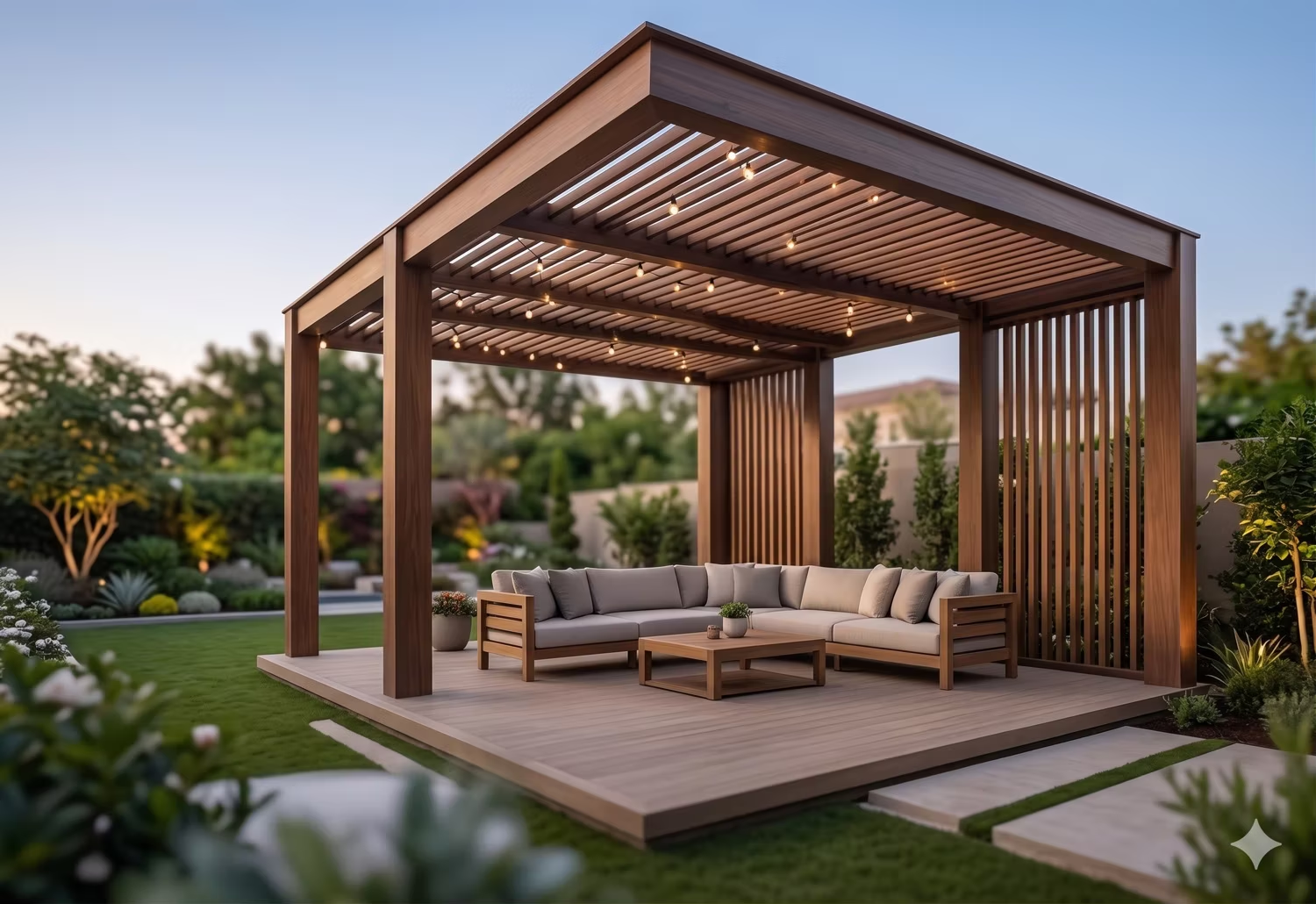
Begin with the table, seats or poolside activity it is intended to shelter. Mark the hours of use and the sun direction at those times. Decide whether the owner wants filtered shade, a more weather-protective roof, climbing planting, integrated lighting or a retractable element. These choices affect loads, drainage, maintenance and the experience beneath the structure. Our pergola placement guide explains why the right position matters before a material is chosen.
Show the pergola on a measured site plan. Posts should not obstruct doors, pool access or a comfortable circulation route. Check connections to the villa and whether a freestanding solution is preferable. A structure that looks light in a rendering may need substantial foundations or concealed bracing. Have a qualified designer confirm the structural approach; this article cannot give a universal span or footing size.
Ask what the client means by “low maintenance”. One owner may welcome periodic timber refinishing for a natural look, while another wants a finish that can be washed and inspected with less routine work. Neither preference is wrong, but it changes the specification and the lifetime cost discussion.
How do aluminium, steel and timber differ in the brief?
Aluminium frames can be formed into clean, relatively slender-looking systems with factory finishes, but the exact profile, alloy, coating, connections and span must be specified by the supplier and structural designer. Steel may be selected where a different structural expression or connection detail is desired; its protective system and maintenance in the site’s exposure are critical. Timber offers a warm natural character and can work beautifully, but exterior wood and coatings change under sun and moisture.
The US Forest Service review of exterior wood finishes explains the trade-off between showing natural grain and protecting wood from ultraviolet weathering. It is not a Dubai pergola design standard, but it supports a practical question: what finish is specified, how will it be maintained and what will it look like between service visits? A timber quotation without species, treatment and finish details is incomplete.
For metal, avoid simplistic promises such as “rust-proof forever.” Ask for the substrate, preparation, coating or galvanizing system, connection metals, coastal-exposure assumptions and warranty conditions. Pay attention to bolts, cut edges and concealed interfaces, not only the large visible members. A proposed aluminium frame with unsuitable fasteners or badly detailed water traps can still create maintenance issues. Request product documentation for the exact system rather than transferring a generic materials claim to the villa.
Does the roof design suit the material choice?
A frame alone does not tell you how much shade falls on the seating area. Slat direction, spacing, overhead fabric, louvres and any glazing or solid panel change light, rain response and heat. Draw a sun study for the actual hours of use. The US Department of Energy landscaping guide describes shade as a deliberate design strategy; its US energy examples are not a Dubai performance promise.
If a roof sheds water, where does it go? Gutters and downpipes should connect to a lawful drainage route and stay accessible for cleaning. If a retractable fabric is used, show its housing, power or manual control, wind-use restrictions and replacement path. If climbing plants are planned, confirm their root space, irrigation, support loads and access to prune around lighting or moving parts. A greenery-covered render does not answer how the structure is inspected.
Decide whether the pergola should connect with nearby pool decking, outdoor kitchen ventilation or villa façades. Finishes and fixings can create waterproofing and fire-safety questions when attached to the house. The qualified project team should resolve those interfaces before fabrication, not after posts are delivered.
What changes for a coastal or highly exposed plot?
A villa near the coast, a sheltered urban courtyard and an open desert-edge plot present different exposure. Wind, airborne salts, direct sun and maintenance access can all affect finish selection. Ask the designer and supplier to state the assumed environment and inspection interval in writing. Do not claim a fixed service life from a catalogue photograph. A product that performs well on an inland shaded terrace may require different detailing at a more exposed site.
For timber, inspect the proposed finish schedule and whether surfaces can be reached for future care. The US Forest Service notes that some clear exterior finishes need more frequent attention than pigmented alternatives; the actual interval depends on product and exposure. For metal, ask how scratches and connection points will be inspected and repaired. For fabric, request cleaning and replacement guidance and clarify whether the warranty covers the textile, mechanism and controls separately.
Community requirements also matter. For example, Palm Jumeirah’s published villa guidance contains conditions relevant to certain external works. It applies to its stated community, not every Dubai plot. Obtain the current documents and approval route for the actual villa before ordering a fixed structure or changing a boundary.
How should two quotations be compared?
Imagine one quotation says “powder-coated aluminium pergola” and another says “treated timber pergola.” Neither is sufficiently defined. Ask each contractor for the same plan, elevations, structural basis, roof performance, foundation design, fastener and finish schedule, drainage route, electrical scope, maintenance instructions and exclusions. Only then does a comparison reveal the trade-offs the owner will live with.
Walk the access route from the street to the installation position. Large prefabricated parts may need lifting or special delivery; a site-built frame may introduce different disruption. Identify irrigation and services below the planned footings. Ask what paving or planting must be temporarily removed and how it will be reinstated. A low quoted frame price can conceal substantial enabling work if the site has not been surveyed.
Request a finish sample in the actual light at the villa. A dark frame can look elegant in a showroom but visually heavy against a narrow courtyard; a pale finish may show soiling more readily. Check the proposed view from indoor rooms and from the pool, not only a single perspective sketch. The design should make the outdoor room better to use, not merely add another object.
What should be approved before the build starts?
The final package should show location, dimensions, structure, foundations, roof or slat arrangement, drainage, finish, integrated services, maintenance access, warranty and the applicable approvals. Confirm who owns the structural design and who signs off site-specific details. Keep records of any concealed connections for future maintenance. If the pergola is part of a larger garden project, coordinate levels, paving and planting before construction begins.
Green Earth’s pergola and gazebo service can be planned alongside villa landscaping so the structure, shade and garden work as one. The right material depends on the actual plot and owner routine. Share the intended use, site photographs and community guidelines for a grounded first design discussion.
Questions about this topic
What is the key takeaway from Pergola Materials for Dubai Villas: Aluminium, Steel or Timber?
Set shade, size, appearance and maintenance priorities first. Ask how the frame, fixings, roof and drainage work together.
What must the pergola actually provide?
Begin with the table, seats or poolside activity it is intended to shelter. Mark the hours of use and the sun direction at those times. Decide whether the owner wants filtered shade, a more weather-protective roof, climbing planting, integrated lighting or a retractable element. These choices affect loads, drainage, maintenance and the experience beneath the structure. Our pergola placement guide explains why...
How do aluminium, steel and timber differ in the brief?
Aluminium frames can be formed into clean, relatively slender-looking systems with factory finishes, but the exact profile, alloy, coating, connections and span must be specified by the supplier and structural designer. Steel may be selected where a different structural expression or connection detail is desired; its protective system and maintenance in the site's exposure are critical. Timber offers a warm natural character...
Does the roof design suit the material choice?
A frame alone does not tell you how much shade falls on the seating area. Slat direction, spacing, overhead fabric, louvres and any glazing or solid panel change light, rain response and heat. Draw a sun study for the actual hours of use. The US Department of Energy landscaping guide describes shade as a deliberate design strategy; its US energy examples are...