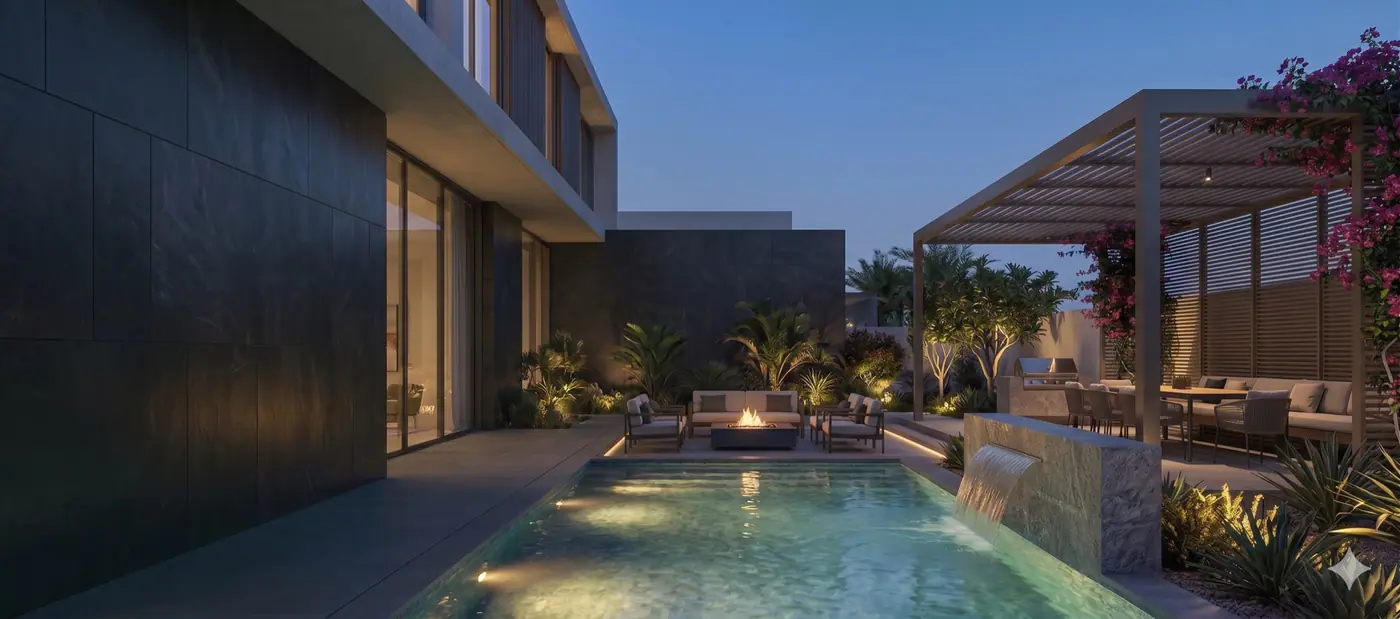
What to know
- Map the direction and location of troublesome wind on the plot.
- Protect the dining, pool and entry areas that matter most.
- Choose screening and planting with a suitable density and maintenance space.
- Keep soil covered and detail paving so dust is easier to manage.
- Specify access to clean filters, drains and furniture after windy weather.
Quick answer: A Dubai villa garden exposed to wind and dust needs a layout response, not just tougher plants. Find where gusts enter, where fine material settles and which outdoor activities are affected. Then coordinate porous screening, planting, surface finishes, drainage and a maintenance route. No hedge can make a garden dust-proof, but a site-specific design can reduce avoidable exposure and cleaning work.
Where does wind actually cause a problem?
Two villas in the same community can have different exposure because of orientation, neighbouring buildings, boundary walls and open land. Walk the property on more than one day if possible. Note where cushions move, where loose soil collects, where leaves gather and where the pool receives windblown debris. Also mark the hours when the terrace is used: a breeze that is pleasant for an afternoon walk may make a dinner setting uncomfortable.
A measured plan should show open corners, gateways and passages where air accelerates. Photograph the deposits after a windy event rather than relying on memory. Distinguish material blown in from outside from soil or mulch originating in your own beds. If an adjoining construction site is the main source, a planting scheme may improve comfort but cannot control the off-site activity. Avoid promising a completely clean pool or terrace.
The USDA Natural Resources Conservation Service explains how tree and shrub windbreaks form a sheltered area on the lee side and how orientation, density and species adaptation matter. Its agricultural distances and planting specifications should not be copied into a compact Dubai villa; use the physical principle and have a local designer model the actual space.
Should the garden use a solid screen, planting or both?
A fully solid wall can redirect wind rather than simply remove it. A porous screen or layered planting may make an activity zone calmer while retaining ventilation, but its result depends on position and size. Test the intended effect on a plan and, where appropriate, with temporary screens before commissioning permanent fabrication. Keep the view from the house and the usable route in mind; a barrier that fixes one gust may block a valued outlook or make a service passage awkward.
Select plants for the conditions behind and in front of the screen. Wind-exposed foliage, soil depth, irrigation and mature spread must be evaluated together. The University of Arizona’s desert-plant guidance discusses adapting plant selection and windbreak layouts to the site. Its regional species list is not automatically suited to Dubai. A young hedge needs establishment care and may not provide immediate shelter; an approved built element can be part of a phased solution.
Ask whether the planting will shed leaves, flowers or fruit near the pool or outdoor kitchen. The goal is not to eliminate all plant material but to position and maintain it deliberately. Provide room to prune the windward and leeward sides, access the irrigation line and replace a failed specimen. The separate privacy-landscaping guide addresses sightlines; a wind-focused screen needs a different performance conversation even if the same element contributes to both.
How do surfaces and pool details affect dust?
Uncovered loose soil can become a source of fine material within the property. Review whether planted beds, appropriate mulch or stable ground cover can protect the soil while still allowing water and maintenance access. Avoid loose decorative material that readily blows into the pool or across a path. A finish should be chosen by its behaviour on the site, not only by its colour in a sample tray.
Paving layout matters too. A terrace with awkward corners and inaccessible gaps may be difficult to sweep or rinse; a low point that holds wash-down water can leave dirt behind. Keep cleaning water away from beds and neighbouring plots and maintain the intended drainage route. Our garden drainage guide explains why levels and outlets should be drawn before paving is laid.
At a pool, review skimmer position, return circulation, nearby planting and equipment access with the pool contractor. Windblown leaves add load to baskets and filters, but a designer should not promise that landscaping alone will solve a filtration issue. Provide a safe, accessible place to empty baskets and store cleaning equipment. Do not let a decorative screen hide the plant-room door or prevent a technician from removing a filter element.
A hypothetical wind-exposed villa
Imagine an open corner beside a pool where afternoon wind crosses a dining terrace. The owner asks for a tall boundary hedge. On the plan, however, the dining table sits between the corner and the proposed hedge; the hedge would not protect the activity zone at the first stage of growth. A smaller porous screen near the terrace, combined with suitable planting and a deliberate seating orientation, might be worth testing before a full boundary treatment. Final sizes and approvals would still depend on the actual villa.
Now trace maintenance movement. Can someone reach the pool filter, irrigation valves and the far side of the screen? Does the proposed planting obscure an entry gate or a child’s line of sight from the house? Does furniture have a secure storage option for stronger winds? These are useful criteria for evaluating a design that claims to be “wind-friendly”. A render of lush foliage does not answer them.
Review the plot’s approval conditions before adding a fixed structure or raising a boundary. Dubai Municipality’s 2026 greenery-manual overview promotes climate-responsive public landscapes, but it is not a blanket private-villa permission. Community and authority requirements vary with the work and location.
What should happen after a dusty day?
Write down an inspection routine that a caretaker can actually follow. Check the pool basket and visible water condition, remove debris from drains and access covers, inspect newly planted specimens and supports, and look for blocked drip emitters or damaged spray heads. Clean fittings with methods suitable for their material rather than assuming a pressure washer is safe for every finish. If the pool water needs treatment, use a qualified pool professional and measured test results, not a fixed extra dose after every windy day.
For newly planted areas, wind exposure can change how quickly a root zone dries. The RHS planting and aftercare guide highlights drought stress during dry, windy weather. The observation applies broadly, but local watering should be set from the actual plant, soil and Dubai conditions rather than a UK schedule. Record adjustments so the next service visit understands why a valve was changed.
Consider storage and housekeeping in the design. A shaded, accessible place for outdoor cushions and cleaning tools can improve usability as much as another row of planting. A stable arrangement of movable furniture reduces the temptation to crowd heavy pieces into a passage whenever the forecast changes.
What should a wind-and-dust brief include?
Provide a site plan marked with troublesome directions, photographs of deposits, the activities to protect and the surfaces that are hard to maintain. Request a plan and section of the proposed screen, a planting schedule with mature dimensions, an irrigation and drainage diagram, material details and a maintenance route. Ask what the design can realistically improve and what remains dependent on weather or neighbouring land.
Green Earth’s villa landscape team can coordinate these elements with the pool and outdoor living layout. A coastal villa, an open desert-edge plot and an enclosed urban courtyard call for different solutions even within Dubai. Send the plot plan and photographs taken after a windy day so the brief starts with evidence rather than a generic hedge recommendation.
Questions about this topic
What is the key takeaway from Designing a Dubai Villa Garden for Wind and Dust?
Map the direction and location of troublesome wind on the plot. Protect the dining, pool and entry areas that matter most.
Where does wind actually cause a problem?
Two villas in the same community can have different exposure because of orientation, neighbouring buildings, boundary walls and open land. Walk the property on more than one day if possible. Note where cushions move, where loose soil collects, where leaves gather and where the pool receives windblown debris. Also mark the hours when the terrace is used: a breeze that is pleasant...
How do surfaces and pool details affect dust?
Uncovered loose soil can become a source of fine material within the property. Review whether planted beds, appropriate mulch or stable ground cover can protect the soil while still allowing water and maintenance access. Avoid loose decorative material that readily blows into the pool or across a path. A finish should be chosen by its behaviour on the site, not only by...
What should happen after a dusty day?
Write down an inspection routine that a caretaker can actually follow. Check the pool basket and visible water condition, remove debris from drains and access covers, inspect newly planted specimens and supports, and look for blocked drip emitters or damaged spray heads. Clean fittings with methods suitable for their material rather than assuming a pressure washer is safe for every finish. If...