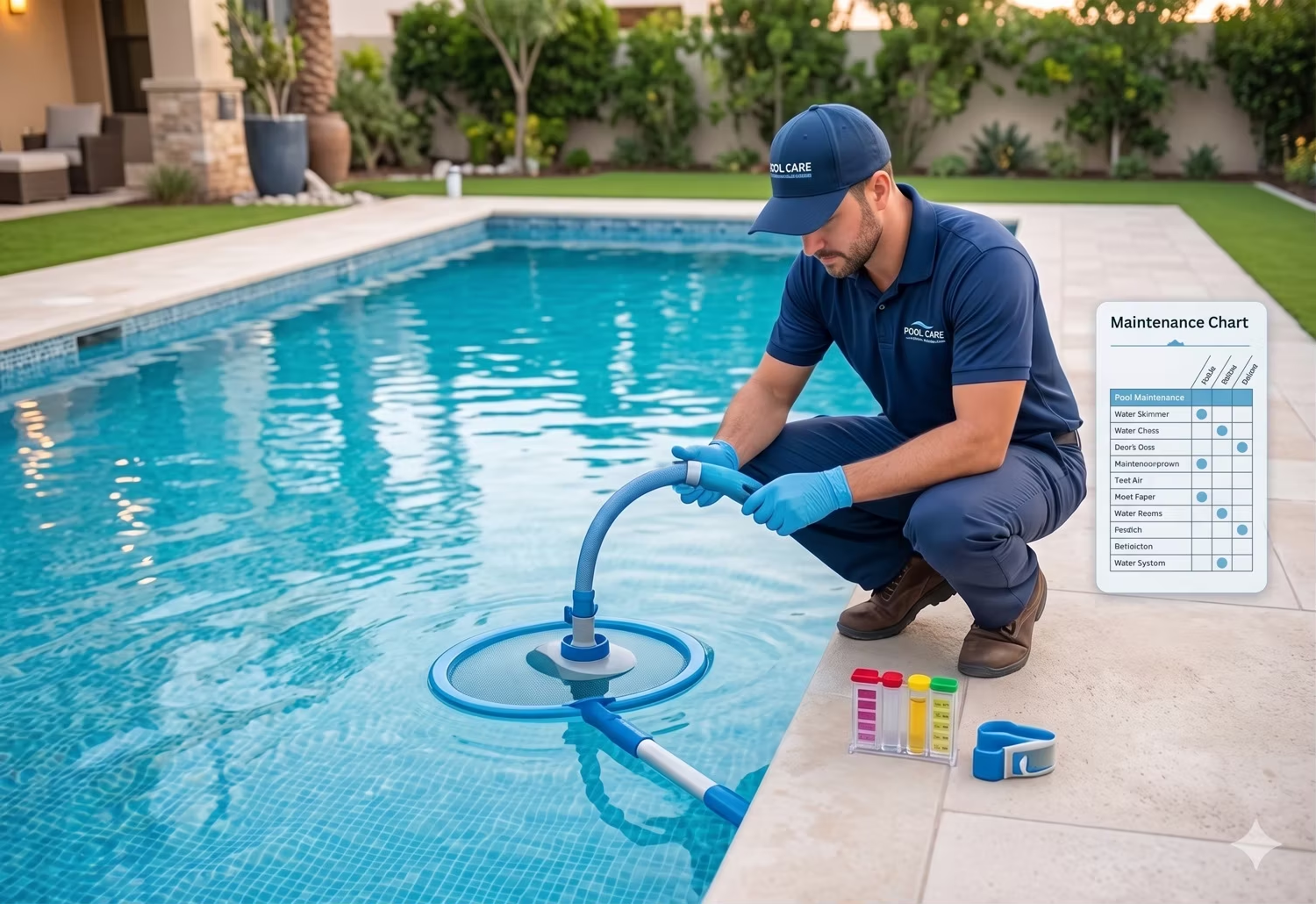
What to know
- List pool size, equipment, cover and current problems before requesting quotes.
- Ask for visit frequency and the tasks completed on each visit.
- Separate routine chemicals and consumables from repairs and replacements.
- Require test and service records, with a clear escalation path.
- Review the contract after a representative operating period.
Quick answer: The cost of Dubai villa pool maintenance cannot be judged fairly from a monthly figure alone. Compare what each quote actually includes: visits, water testing, treatment, cleaning, equipment checks, chemicals, consumables, emergency response and repair approval. A lower headline price may leave more work and expense with the owner. Ask for a written scope and test it against the pool’s real equipment and use.
Why can two maintenance quotes look so different?
A villa pool’s ongoing service needs depend on more than the water surface. Consider volume, filtration type, pump and controls, cover use, landscaping nearby, bather load, exposure to dust and the condition of the system at the start of the contract. A neglected pool that needs corrective work is not the same job as a well-documented new pool. Ask each contractor to inspect the installation or explain the assumptions behind a remote quote. Otherwise, the proposals may not describe the same work.
Frequency matters too. One visit may be a quick visual check while another includes testing, cleaning and equipment inspection. Request the planned visit schedule and the tasks expected on ordinary, seasonal and problem visits. If an owner or building staff will perform daily checks between contractor visits, state that responsibility openly. Our pool-maintenance frequency article explores why a single generic interval does not fit every installation.
Do not accept a universal AED estimate without a defined pool and current offer. Pricing changes with scope and supplier terms, and this article does not have a verified market-price survey. A useful comparison instead standardizes what is included. That protects the owner from choosing a cheap-looking contract that omits a crucial task or paying for services that are not needed by the pool.
What should a routine service scope specify?
At minimum, ask the provider to describe how water quality is assessed, what is cleaned, how treatment is recorded, and what equipment is inspected. The US CDC’s home-pool guidance distinguishes testing and treatment from simply circulating water. Its specific numeric guidance and rules must be considered alongside local requirements and professional direction. The contract should name the measures checked and how results are communicated, rather than saying only “chemicals included.”
Clarify the physical cleaning scope: skimming, vacuuming or robotic cleaner management, brushing where appropriate, basket cleaning and filter attention. Different pools require different methods. Ask whether the technician checks pump noise, pressure, visible leaks, automation alarms and the condition of exposed fittings. The filter comparison guide explains why sand, glass-media and cartridge systems have different cleaning routines. The quote should fit the actual installation.
Include reporting and safety. Who can enter the property, at what times, and how are gate or cover procedures handled? What happens if a visit cannot be completed because access is blocked? If chemicals are stored on site, where and under whose control? The CDC’s chemical-safety toolkit highlights why handling and storage deserve an explicit process. It is US guidance, not a Dubai service contract template, but it makes clear that chemicals are not just a line item on an invoice.
Which exclusions create the biggest surprises?
Ask whether routine treatment products are included and whether specialty chemicals, filter media, cartridges and cleaning equipment are separate. Confirm whether the quoted amount covers testing supplies and consumables used on every visit. A contract can include regular visits yet charge separately for each corrective treatment. That may be appropriate, but it should be written clearly. Request the approval process for any charge outside the base scope.
Separate maintenance from repair. A technician may notice a failed pump seal, leaking valve or damaged tile, but replacing it is often a different scope. Ask whether diagnosis, call-out, labour, parts and follow-up testing are included or separately quoted. Also clarify after-hours response and any weather- or event-related extra visit. Avoid vague promises such as “all repairs covered” unless the terms define limits and exclusions precisely.
Check water and energy implications without assuming a maintenance contract can control every bill. The US EPA’s pool water-efficiency guidance points to covers, filtration practices and leak detection as relevant factors. The owner may need to operate the cover consistently, approve equipment changes or repair a leak promptly. Put those shared responsibilities in writing. Do not promise a precise reduction in bills without measured baseline data and a comparable period.
How do you compare two proposals on the same basis?
Make a simple comparison sheet with rows for visits, water tests, cleaning tasks, filter service, routine chemicals, consumables, repairs, emergency response and reports. Add the pool’s specific equipment, such as heater, chiller, salt system or automatic cover. Leave a blank when a proposal does not say; ask the bidder to fill it. This is more informative than comparing two prices while the scopes differ.
For example, imagine Proposal A lists more visits and a written test record, while Proposal B lists fewer visits but includes a separate owner-operated monitor. Neither is automatically the better choice. The owner must decide whether staff can perform the between-visit checks and whether the pool’s use calls for more attention. If one proposal excludes filter cleaning or all chemicals, calculate its likely additional obligations before comparing cost. This is a hypothetical decision framework, not a price benchmark.
Ask the contractor to walk through one ordinary visit and one problem scenario. What happens if the water test is outside the agreed range? Who authorizes treatment or repair? What if a leak is suspected? Our pool leak-versus-evaporation guide shows why a clear escalation path matters. A report that simply says “pool cleaned” does not tell the owner whether the underlying issue was noticed.
What evidence should arrive after each visit?
A service log should identify the visit date, key observations, water test results where applicable, treatment or cleaning performed and issues requiring owner action. It should be concise enough to use, but specific enough that the next technician can see trends. If the same water or equipment problem recurs, the record can support diagnosis. Photographs may help when a defect is visible, but they should not replace test data or clear notes.
Define the escalation levels. Some routine adjustments can be included in the contract; parts replacement, a major drain-down or structural repair should require a separate proposal and owner approval. Who contacts the owner, through which channel and how quickly? What happens if the pool should be closed pending a safety or water-quality issue? These decisions belong in the operating arrangement, not an improvised call after guests have arrived.
Pool covers, pumps and automation need a handover instruction to make maintenance coherent. If a cover is used only intermittently, the contractor may need to know its operation and inspect its fit. If a controller sends alarms, decide who receives them. The pool handover checklist lists the documents that make service more reliable. Give the provider the final equipment and valve map rather than asking them to infer the installation.
When should the contract be reviewed?
After a representative operating period, compare the proposed scope with actual visits and issues. Were visits completed? Were water tests and treatments recorded? How many extra charges occurred, and were they approved? Did a recurring issue prompt a root-cause investigation or only repeated chemical additions? This review can show whether the contract needs a different visit pattern, equipment repair or a clearer division of responsibility.
Do not judge only by a sparkling surface on the day of inspection. Water can look clear while testing or equipment checks have been neglected. Conversely, a temporary dust event may require extra cleaning despite sound routine service. The owner should evaluate the process and records as well as appearance. Ask for a written review rather than relying on vague reassurance. Our pool maintenance service page outlines Green Earth’s offering for a project discussion.
Green Earth can review a Dubai villa pool’s equipment and operating needs and prepare a scoped maintenance proposal. The amount depends on the actual installation and agreed work. Share pool dimensions, equipment details and recent issues to request a quote that can be compared on substance, not just a headline monthly number.
Questions about this topic
What is the key takeaway from Dubai Villa Pool Maintenance Cost: How to Compare Service Quotes?
List pool size, equipment, cover and current problems before requesting quotes. Ask for visit frequency and the tasks completed on each visit.
Why can two maintenance quotes look so different?
A villa pool's ongoing service needs depend on more than the water surface. Consider volume, filtration type, pump and controls, cover use, landscaping nearby, bather load, exposure to dust and the condition of the system at the start of the contract. A neglected pool that needs corrective work is not the same job as a well-documented new pool. Ask each contractor to...
What should a routine service scope specify?
At minimum, ask the provider to describe how water quality is assessed, what is cleaned, how treatment is recorded, and what equipment is inspected. The US CDC's home-pool guidance distinguishes testing and treatment from simply circulating water. Its specific numeric guidance and rules must be considered alongside local requirements and professional direction. The contract should name the measures checked and how results...
Which exclusions create the biggest surprises?
Ask whether routine treatment products are included and whether specialty chemicals, filter media, cartridges and cleaning equipment are separate. Confirm whether the quoted amount covers testing supplies and consumables used on every visit. A contract can include regular visits yet charge separately for each corrective treatment. That may be appropriate, but it should be written clearly. Request the approval process for any...