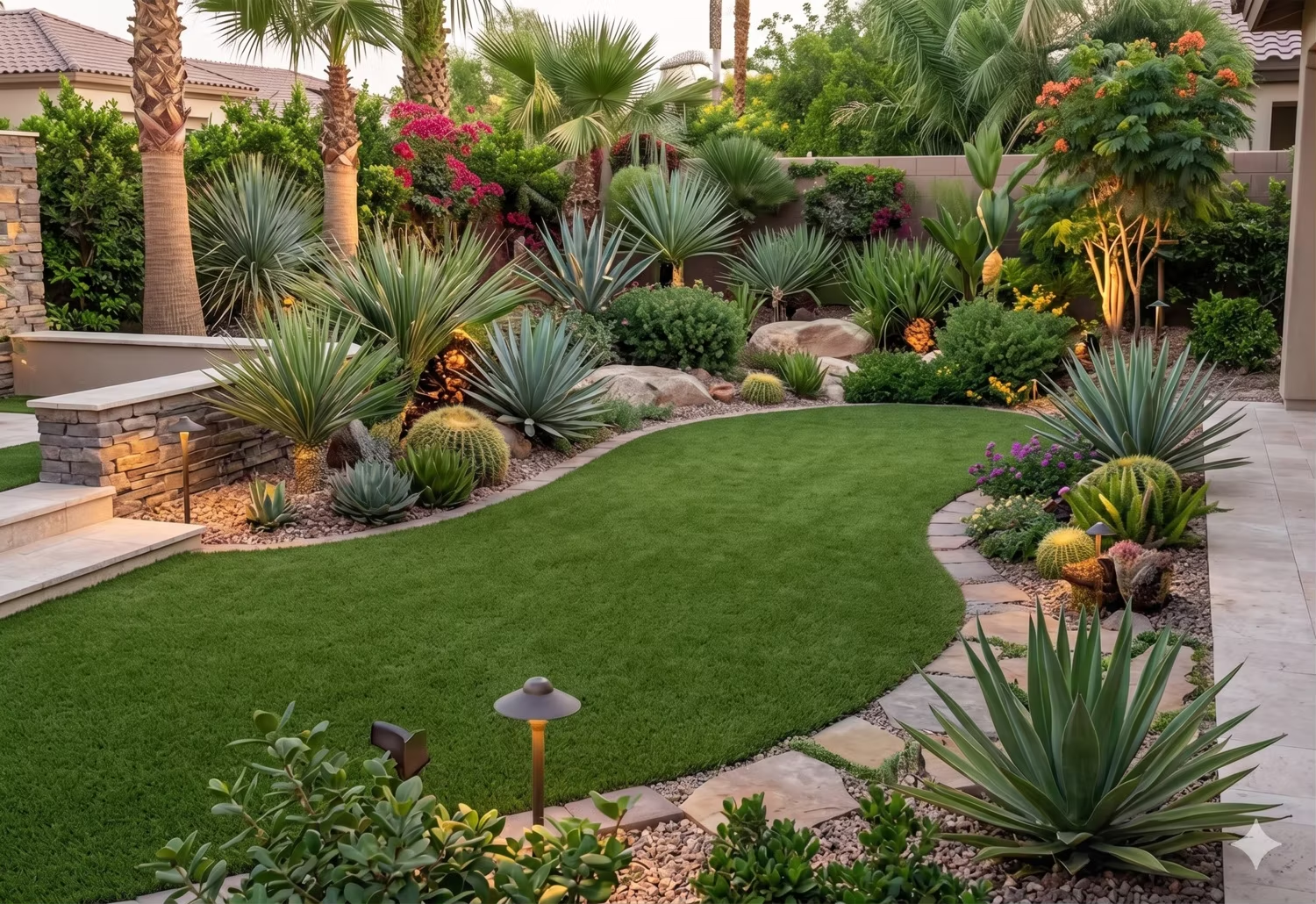
What to know
- Keep only the lawn and planted areas that have a real use.
- Choose plants by mature size and site exposure, then group compatible water needs.
- Make irrigation valves, filters and drains easy to inspect.
- Detail paving and edges for normal cleaning and repair.
- Agree a realistic maintenance schedule from the start.
Quick answer: A low-maintenance Dubai garden is one whose layout, plants, irrigation and surfaces have been chosen to avoid unnecessary recurring work. It is not a garden that needs no care. The largest savings in effort usually come from giving plants enough space, keeping equipment reachable, avoiding awkward strips and specifying who checks water and wear after handover.
Which garden jobs are you trying to reduce?
“Low maintenance” means different things to different villa owners. Some want fewer weekly gardening visits. Others are frustrated by repeated plant replacement, daily leaf clearing near a pool or a difficult irrigation controller. Start by listing the work that actually occurs: mowing, pruning, cleaning paving, adjusting emitters, clearing drains, servicing lights and treating the pool. Record its frequency and who performs it. This makes the design brief measurable without pretending any living garden is maintenance-free.
Separate essential care from preventable care. Newly planted trees and shrubs need active establishment checks even when the eventual garden is designed to be simple. The RHS guidance on planting trees and shrubs explains why a root zone needs aftercare; UK seasonal intervals should not be copied to a Dubai plot. Repeatedly replacing the same plant because a drip line misses it, however, is an avoidable design or maintenance failure. Our new-garden aftercare guide deals with the early period separately.
Ask for a survey before replacing difficult areas. A section that looks “too high maintenance” may actually have poor drainage, incompatible planting, too little root space or a broken valve. The response depends on the cause. Laying more paving over a wet corner without resolving the water path can simply move the problem. A low-care design should be based on evidence from the site, not a list of supposedly easy plants.
How can the layout reduce awkward edges and decorative fragments?
Count the small, hard-to-reach areas in the plan. A narrow lawn ribbon between two paved paths can take more attention than a larger, useful lawn because it has so much edge to trim. A strip of planting behind a fixed bench may be impossible to inspect. Repeated little planters create many irrigation outlets and many potential failures. Consolidating space into a few usable outdoor rooms can reduce work while making the garden feel more generous.
Keep circulation direct enough for daily life and for maintenance equipment. Draw how a gardener gets to the back of beds, how a technician reaches the pool plant room and how large material or replacement plants could move through the plot. A service route does not need to dominate the design; it needs to exist. Our pool plant-room guide shows why access needs to be settled before the landscape closes around equipment.
Decide whether each lawn, tree, hedge and water feature earns its place. A lawn may be the right surface for children and pets. A hedge may provide privacy that a wall cannot. A water feature may make a courtyard more pleasant. None is automatically “bad for maintenance,” but each needs an appropriate care plan. The US EPA’s landscaping guidance likewise frames choices around use, climate and maintenance. Its US plant examples are not a Dubai shopping list.
Which planting choices remain manageable as they grow?
Fast initial growth is often presented as a shortcut to a finished garden. It can also mean frequent clipping and conflict with paths or walls if the plant is wrong for its space. Ask for the mature spread and height expected under the intended conditions, the root space available and the pruning style needed to hold the design. A compact species in an adequate bed can be simpler to care for than a large species repeatedly cut back to fit a narrow strip.
Match plants to actual sun, shade, wind and reflected heat. A sheltered courtyard and a fully exposed pool deck can require different choices even on the same villa. Review irrigation-water quality, soil and drainage before assuming that a plant described as drought-tolerant will thrive. The Dubai plant-selection article is a starting point; the final schedule should name species and show where each one goes. Use a limited palette for easier sourcing, but avoid a single-species design that becomes visually damaged if one plant fails.
Ground layers deserve attention. Bare soil can expose roots, invite unwanted growth and make the garden look unfinished. Appropriate mulch or a well-chosen groundcover may reduce some tasks, but it still needs inspection and renewal or trimming. Near a pool, consider leaf and seed drop before placing a plant over the water. A plant with a beautiful canopy may impose a cleaning burden if its litter falls into the skimmer every day.
Design irrigation that can be checked and adjusted
An irrigation system does not make a garden low-care merely because it is automated. Put plants with broadly similar water needs and exposure on sensible zones; separate lawn from beds where the delivery method differs. Label valves and provide a simple drawing at handover. Give technicians room to reach filters, emitters and controllers. Ask how the owner or gardener will notice a leak, a blocked outlet or a schedule that no longer matches the weather.
For an existing garden, an inspection often beats replacing the whole controller. Check whether the installed valves work, where water actually lands, whether pressure is appropriate and which plants are stressed. The EPA’s home-maintenance guidance recommends checking irrigation and landscape health instead of assuming the system is performing correctly. Our smart irrigation guide explains what sensors and alerts can add; they still require a correctly installed physical system.
Build in a seasonal review rather than one fixed timer setting. The exact schedule needs local judgment for plant species, soil, exposure and water source. Do not import a weekly water quantity from another climate. DEWA provides Dubai irrigation conservation advice, while the designer should provide a plot-specific operating plan. Record each change so the next service visit does not undo it.
Detail paving, drainage and lighting for ordinary upkeep
Paving may reduce mowing, but it introduces cleaning, joint, stain and heat considerations. Compare materials by how they behave when wet, how they are cleaned and whether individual units can be replaced. Avoid a highly textured finish where it traps debris unless its safety or visual benefit justifies that work. Leave drainage falls and cleanouts legible on the technical plan. A flat-looking terrace in a rendering still needs a route for rain and wash water.
Specify the edges. Dust and debris collect where raised planters meet paving or where a step creates a hard-to-reach pocket. A flush edge might simplify sweeping but could allow soil or irrigation runoff onto the terrace if poorly detailed. A low-maintenance design is often won or lost in these small connections. Review mockups or sample details, not only product photographs. The villa drainage article gives a framework for checking water paths before paving is fixed.
Outdoor lights should be accessible for adjustment and repair. Hide wiring safely but not so completely that a damaged fitting requires demolition. Choose a few purposeful lighting layers rather than many decorative points that all need cleaning and replacement. Review glare from windows and seating. The poolside lighting guide covers this where a garden includes water.
Put maintenance assumptions into the handover brief
Ask the designer or contractor to list the expected tasks by area: lawn, beds, trees, paving, irrigation, lighting, pool and water features. Identify what the owner can observe, what a gardener should do and what needs a qualified technician. Clarify which consumables and replacements are excluded from a maintenance proposal. A garden is not genuinely easy to own if its appearance depends on an undisclosed intensive routine.
Review the garden after establishment and after the first demanding weather period. Photograph plant stress, pooling water and uneven irrigation; use those observations to adjust the schedule or design. Keep the planting list, controller map, manuals and warranty contacts together. For new work, the pool and garden handover checklist is a practical document list. It helps the maintenance team know what was installed rather than rediscovering it later.
Green Earth can plan a lower-care layout through villa landscaping and coordinate the irrigation and hardscape details with the wider outdoor project. The right result differs by plot, household and budget. Tell us which garden jobs are taking the most time and share a plan or photographs, so the next design conversation addresses the real burden.
Questions about this topic
What is the key takeaway from Low-Maintenance Garden Design in Dubai: What Actually Reduces Work?
Keep only the lawn and planted areas that have a real use. Choose plants by mature size and site exposure, then group compatible water needs.
Which garden jobs are you trying to reduce?
“Low maintenance” means different things to different villa owners. Some want fewer weekly gardening visits. Others are frustrated by repeated plant replacement, daily leaf clearing near a pool or a difficult irrigation controller. Start by listing the work that actually occurs: mowing, pruning, cleaning paving, adjusting emitters, clearing drains, servicing lights and treating the pool. Record its frequency and who performs it....
How can the layout reduce awkward edges and decorative fragments?
Count the small, hard-to-reach areas in the plan. A narrow lawn ribbon between two paved paths can take more attention than a larger, useful lawn because it has so much edge to trim. A strip of planting behind a fixed bench may be impossible to inspect. Repeated little planters create many irrigation outlets and many potential failures. Consolidating space into a few...
Which planting choices remain manageable as they grow?
Fast initial growth is often presented as a shortcut to a finished garden. It can also mean frequent clipping and conflict with paths or walls if the plant is wrong for its space. Ask for the mature spread and height expected under the intended conditions, the root space available and the pruning style needed to hold the design. A compact species in...