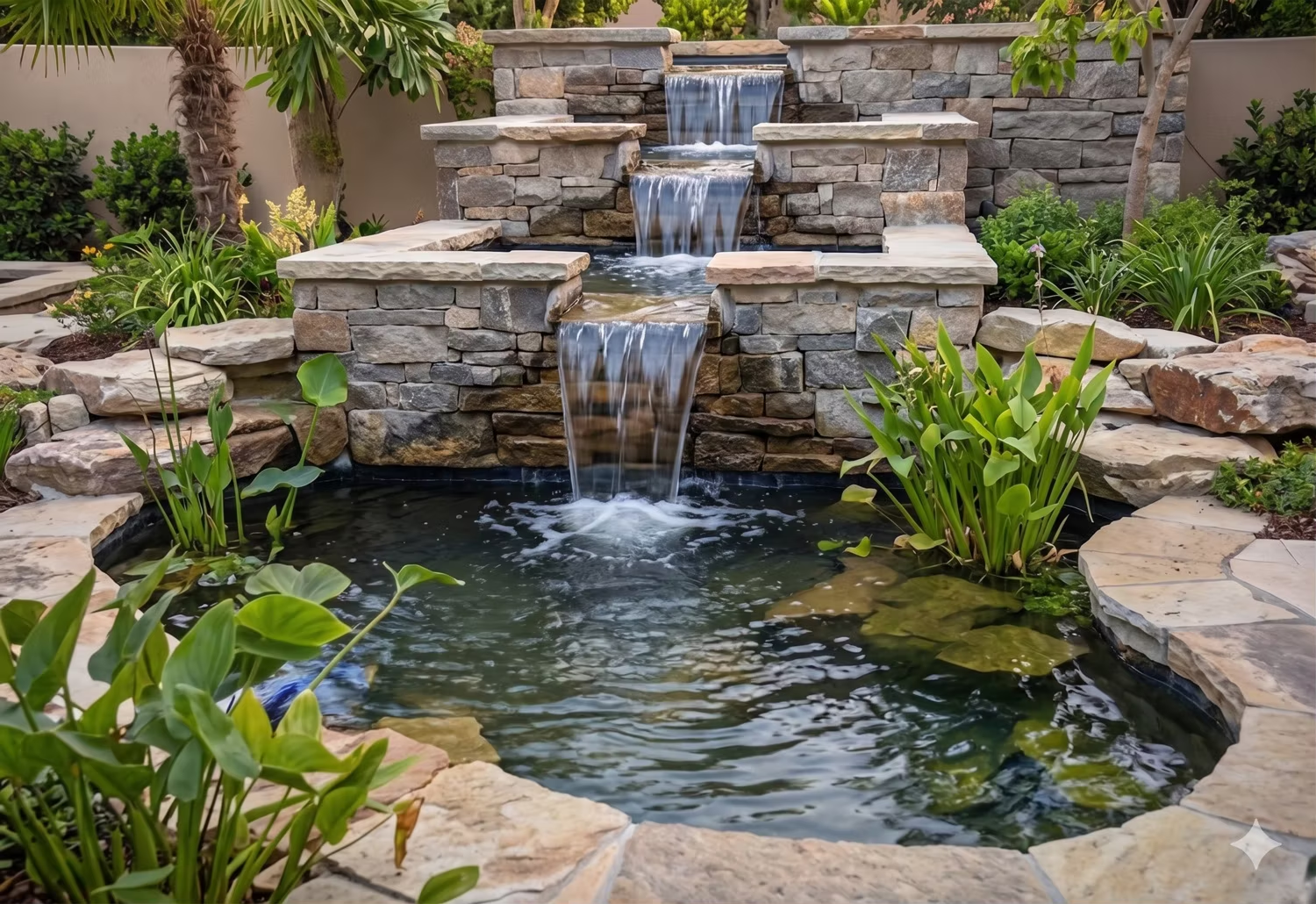
What to know
- Choose one primary purpose: view, sound, movement or atmosphere.
- Test scale and sound from the seats and rooms that will face it.
- Plan recirculation, make-up water, overflow and cleaning access.
- Keep equipment serviceable and address water hygiene.
- Coordinate lighting, planting and community approval before building.
Quick answer: A Dubai villa water feature should be chosen for the space it improves, the sound it makes and the maintenance its owner can support. Decide whether the goal is a quiet visual reflection, a moving sound near seating or a focal point on arrival. Then design water supply, recirculation, drainage, cleaning access and lighting around that purpose. A fountain that only works in a rendering is a poor long-term addition.
What should the water feature do for the villa?
Start with a location and a purpose, not a product catalogue. A shallow reflective plane may reinforce a view from the entrance. A modest moving-water element may make a courtyard more pleasant to sit in. A larger cascade might become the visual focus of a pool terrace, but it can also compete with conversation and create more splash. Mark the places from which the feature will be seen and heard, including neighbouring rooms and outdoor seats. The best location is often smaller and more deliberate than the first dramatic sketch.
Check whether the household will use the garden while the feature runs or mainly look at it from inside. A continuous sound beside a bedroom window may feel very different at night from an afternoon showroom demonstration. A feature beside a dining table should not wet food or seating when wind changes. Walk the site at likely use times and test mockups when possible. If an existing pool is nearby, decide whether the water feature is part of that system or an independent decorative element with its own maintenance needs.
The Green Earth water-features service can be coordinated with paving, planting and outdoor rooms. Our villa landscaping guide gives the wider planning context. The feature should support the main uses of the garden, not narrow a path or obscure the one view the design was meant to celebrate.
How do you judge sound and scale before construction?
Sound depends on more than height. Flow rate, the surface water strikes, basin shape and nearby walls all change what a person hears. Ask for a demonstration of a comparable mechanism or a temporary on-site test if sound is a primary reason for the feature. Do not promise that a fountain will mask road or neighbour noise without testing at the actual seat. A quiet trickle can disappear against traffic; a louder cascade can make relaxed conversation difficult. Specify the desired experience in words that can guide a prototype.
Show the feature at eye level and in section. A wall of water can look thin on plan but dominate a small courtyard. A low basin may look elegant from above yet vanish behind a sofa. Check the distance between water edge and circulation, especially where visitors or children will pass. If an edge is accessible, consider how it is made visible and safe. The 3D view can help with proportion, but dimensioned drawings should establish the actual footprint and levels.
Light can change the experience after dark. Place fittings so they reveal movement without glaring into a window or seat. Keep electrical connections appropriate for the wet environment and accessible to qualified service personnel. The poolside landscape-lighting guide offers useful principles on layers and glare, even when the proposed feature is separate from the pool. Avoid choosing dramatic coloured lighting before confirming the daytime composition and service plan.
Where does the water come from and go?
Ask the designer to draw the basin, pump, recirculation route, make-up water, overflow and drain. A recirculating system still loses water through evaporation, splash, cleaning and any leak. An open-water feature should therefore have a clear water-management plan, rather than a hidden pipe connected without monitoring. The US EPA’s technical sheet on pools and outdoor water features treats water use as a design matter. Its US home-standard criteria are not UAE regulation, but the need to identify the supply and operating system applies to a villa brief.
Design for the actual water movement. Wind can carry a spray beyond the intended basin; a waterfall may splash onto paving or planting. Show where overflow goes during a heavy rain or a control failure, and how the basin can be drained for cleaning. Coordinate this with the garden’s levels and drains. The Dubai garden drainage guide explains why water routes should be drawn before the surrounding paving is fixed.
Choose pump access early. An under-sized access hatch behind a fixed planter makes an otherwise simple feature expensive to service. Show how a technician can remove the pump, inspect a filter, reach the controls and clean the basin. Confirm noise and vibration at the seating and neighbouring rooms. If the feature uses a cover, screen or specialist finish, specify how it is removed and replaced. An elegant monolithic face does not justify sealing all service components inside it.
What cleaning and water hygiene will it require?
Water features collect dust, leaves and mineral deposits. They may develop algae or biofilm if neglected. The US CDC’s decorative-fountain water-management guidance emphasizes regular cleaning, disinfection where appropriate and attention to design components. That guidance is not a turnkey maintenance schedule for a private Dubai garden; a qualified local provider should specify the actual treatment and monitoring method for the selected system. The design should make that work practical rather than hiding the basin behind delicate cladding.
Ask who will clean the water surface, basin, nozzles and filters, and how often they will inspect operation. Clarify which parts can be handled by the gardener and which need a specialist. If the feature will be switched off for long periods, agree how it will be drained, cleaned and restarted. An idle basin that retains water is not the same as an empty dry sculpture. The owner’s desired operating hours should be included in the design and care plan.
Water use should be reviewed honestly. The US EPA’s pool-water guidance describes evaporation from open water surfaces. A decorative feature is not a swimming pool, so pool treatment and savings figures should not be copied over, but an exposed surface still needs make-up water. Ask how water level will be observed and whether a leak can be distinguished from ordinary loss. Avoid a claimed percentage saving without measured baseline conditions.
How does the feature meet planting and paving?
Place planting where it softens the feature without dropping excessive debris into the water or blocking service access. If the desired look is lush, show the mature plant spread rather than only small nursery specimens. Roots, waterproofing and irrigation should be coordinated so the planting does not damage the basin. A narrow wet edge may need a different finish from the dry dining terrace. Check slip resistance and cleaning in the places people actually step.
Consider the feature’s relationship to shade and wind. A sun-exposed surface may behave differently from one under a canopy, and a strong wind can move sound and splash. Do not use planting as a substitute for a required safety barrier around a deeper water body. Ask for sections that show basin depth, edges, drains and any accessible steps. If the installation is connected to an existing pool, the pool specialist should confirm how its hydraulics, treatment and maintenance are affected.
Community controls can apply to built water features. The published Palm Jumeirah villa guidelines, for example, include water features among outdoor works. This does not mean the same criteria apply across Dubai. Confirm the current rule and approval route for the particular villa before construction. Even when a feature is small, it may affect levels, utilities or neighbouring property.
What belongs in a useful design and handover package?
Give the designer photographs from the key viewpoints, the intended sound, operating hours, nearby activities and maintenance expectations. Request a plan, section, material sample, equipment schedule, water and electrical route, access detail and cleaning method. If sound is central, ask how it will be tested before final acceptance. Mark which assumptions require specialist review or community consent. A clear brief makes it easier to compare a quiet reflecting feature with a more active cascade.
At completion, test the feature at normal operating flow. Inspect splash at the edges, noise at seats and windows, drainage, lighting, pump access and the ability to clean the basin. Keep manuals, isolation points, as-built routes and maintenance instructions with the wider garden handover. The pool and garden handover checklist is a useful model for organizing these records.
Green Earth can design water features and ponds within a coordinated villa landscape. The best first conversation is about what you want to see and hear, where you want to experience it and how much care you are prepared to support. Share those details and a plot plan to shape a feature that works beyond opening day.
Questions about this topic
What is the key takeaway from Dubai Villa Water Feature Design: Sound, Scale and Maintenance?
Choose one primary purpose: view, sound, movement or atmosphere. Test scale and sound from the seats and rooms that will face it.
What should the water feature do for the villa?
Start with a location and a purpose, not a product catalogue. A shallow reflective plane may reinforce a view from the entrance. A modest moving-water element may make a courtyard more pleasant to sit in. A larger cascade might become the visual focus of a pool terrace, but it can also compete with conversation and create more splash. Mark the places from...
How do you judge sound and scale before construction?
Sound depends on more than height. Flow rate, the surface water strikes, basin shape and nearby walls all change what a person hears. Ask for a demonstration of a comparable mechanism or a temporary on-site test if sound is a primary reason for the feature. Do not promise that a fountain will mask road or neighbour noise without testing at the actual...
Where does the water come from and go?
Ask the designer to draw the basin, pump, recirculation route, make-up water, overflow and drain. A recirculating system still loses water through evaporation, splash, cleaning and any leak. An open-water feature should therefore have a clear water-management plan, rather than a hidden pipe connected without monitoring. The US EPA's technical sheet on pools and outdoor water features treats water use as a...